Brexit: The Great British Gamble That Left the Country Paying the Price
Britain was promised greater prosperity, renewed sovereignty and a future in which it could thrive…

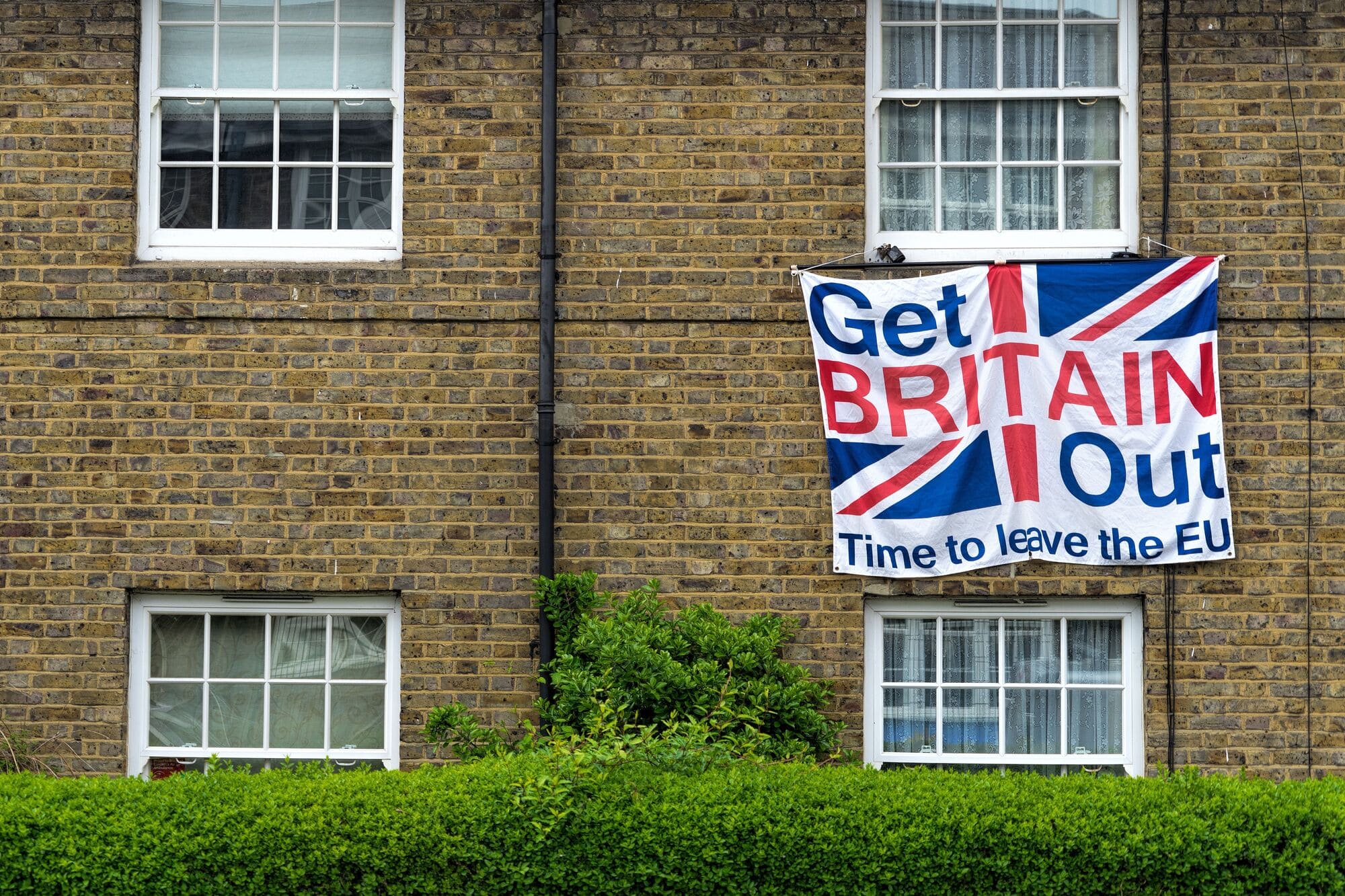
Britain was promised greater prosperity, renewed sovereignty and a future in which it could thrive outside the European Union. A decade after the referendum, the evidence suggests that the economic costs have been substantial, the promised benefits have proved elusive, and ordinary people and businesses have been left to navigate a more complicated relationship with Britain’s largest nearby trading market.
On 23 June 2016, the United Kingdom made one of the most consequential political decisions in its modern history. By a narrow majority, voters chose to leave the European Union, encouraged by promises that Britain could take back control of its borders, reclaim its laws, strike better trade deals and redirect money previously sent to Brussels towards domestic priorities.
The campaign was about much more than economics. For many people, it was a protest against political elites, a demand for democratic accountability and an expression of frustration with immigration and the pace of social change. Those concerns were real, and dismissing everyone who voted Leave as misinformed would be both unfair and counterproductive.
But a political decision must ultimately be judged not only by the promises made when it was sold, but by the results it delivers.
And on the central economic question — whether leaving the EU has made Britain more prosperous than it would otherwise have been — the evidence is increasingly difficult to ignore.
The UK’s economy has continued to grow in the years since the referendum. Brexit did not bring economic collapse, and it would be wrong to attribute every subsequent problem to leaving the EU. The Covid-19 pandemic, Russia’s invasion of Ukraine, the global energy shock, domestic policy decisions and Britain’s longstanding productivity problems have all played significant roles.
Yet the relevant comparison is not between Britain today and a Britain that ceased to exist in 2016. It is between the Britain we have and the Britain we might reasonably have expected had the country remained inside the world’s largest single market.
On that comparison, the economic case for Brexit looks distinctly unconvincing.
1. A smaller economy — and a bill Britain cannot easily see
One of the most important consequences of Brexit is also one of the least visible: the economic growth that never happened.
The Office for Budget Responsibility (OBR), the independent body that scrutinises the government’s economic forecasts, continues to estimate that Brexit will reduce Britain’s long-run productivity by approximately 4% compared with remaining in the EU. It also assumes that UK imports and exports will each be around 15% lower in the long run than they would otherwise have been.
These figures require careful interpretation. They do not mean that Britain’s economy has shrunk by 4% since 2016. They mean that its productive capacity is expected to be lower than it would have been under continued EU membership.
That distinction matters enormously.
Imagine two otherwise similar countries. Both experience technological change, population growth and global economic shocks. One retains frictionless access to its main regional market; the other introduces additional barriers to trade with that market. Both may grow, but the second can fall progressively behind.
That is the concern confronting Britain.
The Centre for European Reform’s June 2026 analysis estimated that Brexit had reduced UK exports to the EU by around 12% and imports from the EU by around 16% compared with its model of what would have happened without Brexit. Its analysis also found substantial differences across industries, including weaker EU trade in financial services, chemicals, pharmaceuticals and agrifood exports. These are estimates based on a counterfactual model, not figures directly observable in government accounts, but they provide a detailed picture of the potential cost.
Why should ordinary people care?
Because economic output is not an abstract statistic. A less productive economy generates less income than it otherwise could, gives businesses fewer opportunities to expand and limits the resources available for public services. Lower output can mean lower tax receipts, weaker wage growth and greater pressure on public finances.
It also makes the country’s existing problems harder to solve. Britain needs money for the NHS, schools, infrastructure, housing, scientific research and the transition to a low-carbon economy. A weaker economic base makes all those priorities more difficult to fund.
The irony is that Brexit was sold partly as a way of giving Britain greater control over its destiny. Yet a country with weaker growth and a narrower tax base may have less practical freedom to pursue its ambitions.
2. British businesses were handed a new obstacle course
Before Brexit, a British company could generally sell goods to customers elsewhere in the EU without the customs declarations and border formalities associated with trade between separate customs territories. Many businesses could operate across borders as naturally as they operated between different parts of Britain.
That advantage was not an accident. It was one of the principal benefits of membership of the single market and customs union.
The Trade and Cooperation Agreement, which took effect in 2021, preserved tariff-free and quota-free trade for qualifying goods. But tariff-free does not mean paperwork-free, nor does it mean frictionless trade.
Businesses can now face customs declarations, rules-of-origin requirements, additional product certification, regulatory differences and checks on certain agricultural and food products. The precise requirements depend on the goods and the direction of trade.
For a multinational corporation with dedicated compliance departments, these costs may be manageable. For a small British manufacturer, specialist food producer or online retailer, they can make the difference between a profitable European customer and a customer no longer worth serving.
Consider a small British company selling specialist food products to France, Germany and the Netherlands. It may need to understand new documentation requirements, meet relevant health certification rules, coordinate with transport providers and account for delays or additional costs. Even if the product itself faces no tariff, the administrative burden can consume the profit on a small order.
The same problem applies to European businesses considering British customers. Brexit introduced friction in both directions.
The consequences extend beyond paperwork. Smaller markets mean fewer opportunities to spread fixed costs, less incentive to invest in production capacity and fewer chances for promising firms to grow into internationally competitive businesses.
The OBR’s long-standing assessment is that these additional trade barriers will reduce Britain’s long-term productivity. Meanwhile, the Centre for European Reform’s 2026 modelling suggests that leaving the single market has done considerably more damage to trade than leaving the customs union alone.
That is an important distinction for anyone arguing that a limited customs agreement would solve the problem. It could help some businesses, but it would not automatically restore the wider advantages of single-market membership.
3. Investment: the opportunities that went elsewhere
Economic growth depends not only on what a country produces today but on what it invests in for tomorrow.
New factories, advanced machinery, research laboratories, software, training and transport infrastructure help businesses produce more with the same resources. When investment weakens, the consequences can accumulate for years.
The Brexit referendum introduced prolonged uncertainty about Britain’s future trading relationship with the EU. Businesses had to consider whether supply chains would remain viable, whether regulatory arrangements would change and whether Britain would still be the best location for serving European customers.
Some delayed decisions. Others adapted their operations. Some chose to establish or expand facilities elsewhere.
The Centre for European Reform’s counterfactual analysis estimated that UK business investment was around 11% lower than it would have been by the second quarter of 2022. The National Institute of Economic and Social Research has also modelled a substantial negative effect on investment, output and productivity. These are estimates of the gap against an alternative economic path, rather than claims that investment necessarily fell by those percentages in absolute terms.
Why does this matter now?
Because a decision not to build a factory, expand a research team or upgrade equipment can affect productivity for a decade or longer. The damage is not limited to the year in which the investment was postponed.
Britain also needs to compete for international capital. Investors can choose between locations offering access to large markets, skilled workers, reliable infrastructure and predictable rules. Leaving the EU did not make Britain unattractive overnight, and it retains major advantages, including its universities, legal system and global financial centre. But it added a disadvantage that did not previously exist.
This is particularly troubling because Britain already had a productivity problem before the referendum. The country needed to encourage investment, not introduce another source of uncertainty into its relationship with its most important regional trading partner.
Brexit cannot explain every missed investment opportunity. But the evidence suggests that it has made the investment environment less favourable than it would otherwise have been.
4. The hidden cost at the supermarket checkout
For many households, the most immediate economic consequences of Brexit are not measured in GDP forecasts. They are measured in pounds spent at the supermarket.
Research by economists at the Centre for Economic Performance at the London School of Economics provides a particularly striking example.
Their study, published in December 2022, estimated that new non-tariff barriers associated with Brexit had increased UK food prices by approximately 6%. The researchers calculated that the additional cost to households reached around £5.8 billion by the end of 2021, equivalent to approximately £210 per household over the two years studied.
These findings are not an assertion that Brexit caused all the food inflation Britain experienced. Global supply-chain disruption, higher energy costs, Russia’s invasion of Ukraine, weather conditions and other factors also affected food prices. The study sought to isolate the additional effect of Brexit-related trade barriers.
Its conclusion was that the costs were substantial.
Food is especially important because it is not an optional luxury. A wealthier household may absorb higher grocery prices by reducing savings or spending less on entertainment. A household already struggling with rent, energy bills and childcare has far less room to manoeuvre.
The LSE researchers found that the poorest households experienced a proportionately greater increase in their overall cost of living. Their estimate was a Brexit-related increase of 1.1% for the lowest-income tenth of households, compared with 0.7% for the highest-income tenth.
That is an uncomfortable result for a political project frequently presented as a means of restoring control to ordinary citizens.
Of course, leaving the EU also gave Britain the ability to change its own agricultural and trade policies. Governments could, in principle, choose to reduce certain tariffs on food from other countries. But those opportunities do not eliminate the practical costs of new regulatory barriers with Europe, nor do they guarantee that alternative suppliers will offer equivalent prices, quality or reliability.
The wider lesson is simple: sovereignty over trade policy is not the same as cheaper shopping.
5. Labour shortages and the cost of losing flexibility
One of the central arguments for Brexit was the promise of greater control over immigration. Ending free movement was therefore a defining feature of the new relationship with the EU.
But labour markets do not respond to political slogans. They respond to the availability of workers with the right skills, in the right locations, at the right time and at a cost employers can afford.
Before Brexit, British employers could recruit eligible workers from across the EU under free-movement rules. That did not mean every vacancy was easy to fill, nor that every worker was available to every employer. But it provided a substantial pool of labour for sectors that depended on European recruitment.
After free movement ended, EU citizens faced new immigration requirements, with different rules applying to different categories of work. The UK’s new immigration system opened routes for many non-EU workers, and overall migration subsequently increased sharply. Brexit therefore did not simply result in fewer immigrants; it changed where workers came from and which routes were available to them.
The consequences were particularly challenging for some employers in agriculture, food processing, hospitality and other sectors that had relied on European workers and on recruitment arrangements that no longer operated in the same way.
Farmers growing perishable crops cannot always wait for a vacancy to be filled. Fruit and vegetables can spoil in the fields. Food-processing companies need sufficient staff to meet orders. Hotels and restaurants need workers available when customers arrive.
When labour is unavailable, employers may raise wages, reduce production, shorten opening hours or leave jobs unfilled. Higher wages can be beneficial to workers, but when they reflect an avoidable shortage rather than greater productivity, they can also increase costs for businesses and customers.
Brexit is not the sole explanation for these difficulties. Low pay, poor working conditions, housing costs, the pandemic and domestic immigration-policy choices have also mattered. Nor is it accurate to claim that the UK has experienced a universal labour shortage across every industry.
The more defensible conclusion is that Brexit removed a source of labour-market flexibility without guaranteeing that the new system would provide workers on equivalent terms where and when employers needed them.
That is a particularly significant cost for a country trying to improve productivity while maintaining food production and essential services.
6. Productivity: why Britain risks falling further behind
Productivity is one of the least glamorous subjects in politics, but it is one of the most important determinants of living standards.
It measures how much an economy produces from the labour, capital and resources it uses. When productivity rises, businesses can produce more efficiently, wages have greater scope to increase, and governments can collect more revenue without necessarily raising tax rates.
Britain’s productivity performance has been disappointing for years. Brexit has added another challenge to a problem that was already serious.
In November 2025, economists Nicholas Bloom, Philip Bunn, Paul Mizen, Pawel Smietanka and Gregory Thwaites published a study through the US National Bureau of Economic Research examining the economic impact of Brexit over nearly a decade.
Their analysis estimated that, by 2025, Brexit had reduced UK GDP by approximately 6% to 8%, investment by between 12% and 18%, and productivity by 3% to 4%, relative to their model of a Britain that had remained in the EU. The study combined comparisons with other economies and evidence from businesses to estimate the effects. Its results are substantial, although they remain estimates rather than directly observable measurements of an alternative Britain.
The difference between this estimate and the OBR’s 4% long-run productivity assumption is important. The studies use different methods, measure different outcomes and consider different time horizons. They should not be treated as interchangeable or added together.
Nevertheless, they point towards the same underlying concern: leaving the EU has made it harder for Britain to realise some of the gains that come from international trade and economic integration.
Trade exposes businesses to competition, gives them access to larger markets and allows them to specialise. A British manufacturer can benefit from importing advanced components, learning from international suppliers and selling its finished products to customers across Europe.
When these relationships become more expensive or complicated, businesses may invest less, serve fewer customers or face weaker competitive pressure. Over time, that can reduce the incentive and ability to innovate.
There is also a less visible cost. Businesses have had to devote management time and money to adapting to new trading arrangements. That is time and money that could otherwise have been spent developing products, improving services or training employees.
Brexit has not made innovation impossible. Britain remains a world-class centre for many forms of research and entrepreneurship. But a country already struggling to raise productivity has made its economic environment more complicated when it needed to make it more productive.
7. Financial services: London remains important, but the rules have changed
One of the most damaging misconceptions about Brexit is that Britain would automatically retain all the advantages of its financial services industry simply because London was already a global financial centre.
London’s financial sector remains formidable. It benefits from deep capital markets, specialist expertise, an international workforce, legal infrastructure and a concentration of professional services that cannot be replicated overnight.
But its position in Europe was strengthened by a specific legal advantage: financial services passporting.
Before Brexit, qualifying UK-regulated financial firms could use passporting arrangements to provide certain services across EU member states without establishing a separately authorised operation in every country. That system ended when the transition period concluded.
The UK’s Financial Conduct Authority confirms that passporting between Britain and the European Economic Area has ended, requiring firms to consider alternative permissions and regulatory arrangements when serving European clients.
This was not a minor administrative adjustment for every firm. For some businesses, it meant establishing or expanding an EU subsidiary, transferring particular activities or restructuring their relationships with customers.
European financial centres were ready to compete for those activities.
Amsterdam attracted significant euro-denominated share trading after Brexit, while Paris, Frankfurt and Dublin benefited from different forms of financial-sector relocation. The precise distribution of activity varies by business line, and not every job or asset that moved from London can be attributed solely to Brexit.
Nevertheless, the broader point is clear: the EU gained opportunities to develop financial activity within its own regulatory jurisdiction that London had previously been able to serve directly.
The danger is not necessarily that London will cease to be a leading financial centre. It is that the UK may lose opportunities at the margin — new teams, future investment, specialist services and the additional business that grows around them.
Financial services generate highly skilled employment, export earnings and tax revenues. They also support a much wider professional ecosystem, including legal firms, accountants, technology companies and specialist consultants.
Even a partial loss of activity can have consequences beyond the immediate number of jobs relocated.
The question is not whether London has survived Brexit. It has. The question is whether it would have been in an even stronger position had it retained its former access to the European market.
8. Northern Ireland: a constitutional problem with a commercial price
Brexit also created a particularly difficult problem for Northern Ireland.
The UK wanted to leave the EU’s single market and customs union. At the same time, it needed to avoid a hard border on the island of Ireland, protect the Good Friday Agreement and preserve the delicate political arrangements that had helped sustain peace.
These objectives created a practical dilemma. If Northern Ireland followed Great Britain completely out of the EU’s goods framework, additional controls would be needed on the land border with the Republic of Ireland. If those controls were avoided, arrangements would be needed to protect the EU single market while allowing goods to move across the Irish Sea.
The Northern Ireland Protocol, followed by the Windsor Framework agreed in 2023, addressed that dilemma by establishing special arrangements for Northern Ireland.
Under these arrangements, certain goods entering Northern Ireland from Great Britain are subject to additional procedures, while goods considered to be at risk of entering the EU single market face more extensive controls. The Windsor Framework simplified many processes and introduced more flexible arrangements for goods remaining in Northern Ireland, but it did not eliminate every form of trade friction.
For businesses, this has meant navigating a system that can require additional documentation, product categorisation, labelling or checks, depending on the goods being moved and their destination.
For political leaders, it has created an ongoing challenge in reconciling Northern Ireland’s place within the UK with its distinctive economic relationship with the EU.
There is an important qualification here: Northern Ireland’s arrangements also provide advantages, including access to both the UK internal market and the EU single market for goods. Those opportunities could benefit some businesses and attract investment.
But the need for the Windsor Framework itself illustrates a fundamental problem. Brexit was supposed to simplify Britain’s ability to govern itself. Instead, it required an elaborate set of arrangements to reconcile competing commitments that EU membership had previously helped accommodate.
The cost has not been purely economic. It has also involved political conflict, administrative complexity and prolonged uncertainty for businesses.
Northern Ireland demonstrates how leaving a deeply integrated economic and political arrangement can create consequences that extend well beyond the original decision.
9. The promise of global trade deals: a benefit, but not a replacement
Brexit’s defenders often argue that Britain is now free to negotiate its own trade agreements and pursue commercial opportunities around the world.
That is a legitimate advantage of leaving the EU’s common trade policy. Britain can negotiate agreements tailored to its own priorities, and it has concluded arrangements with countries including Australia and New Zealand, as well as joining the Comprehensive and Progressive Agreement for Trans-Pacific Partnership.
These agreements can create opportunities for exporters, investors and consumers. It would be unreasonable to dismiss them simply because Brexit has imposed other costs.
But their economic significance needs to be kept in perspective.
The OBR’s assessment is that the trade agreements signed by Britain since leaving the EU are expected to provide a relatively small boost to long-term GDP, insufficient to offset the assumed negative impact of Brexit on trade and productivity. Its analysis of the individual agreements has put their combined long-term GDP effect at around 0.25%.
This is not surprising. Britain already traded with many of these countries before Brexit, either under EU agreements or on other terms. A new agreement may improve access, but the incremental benefit depends on what changes in practice.
Nor can a trade agreement with a distant market necessarily replace the commercial advantages of proximity to Europe. For many businesses, nearby customers are easier to serve, supply chains are already established, and goods can be transported quickly. Trade in services also depends on regulatory arrangements, professional qualifications and the ability to operate across borders.
The realistic question is not whether Britain can trade globally outside the EU. Of course it can. It is whether the additional opportunities from independent trade policy outweigh the costs of making trade with Europe more difficult.
The available evidence suggests that, so far, they have not.
10. Sovereignty is valuable — but what is it worth if prosperity suffers?
There is a deeper issue at the heart of the Brexit debate.
For many Leave voters, sovereignty was never merely a means of increasing GDP. It was an end in itself. They wanted British laws to be made in Britain, immigration policy to be determined by the British government and elected representatives to be directly accountable to the British public.
Those are political preferences, not economic calculations, and they deserve to be taken seriously.
A country may rationally accept an economic cost to achieve a political objective. Governments make such choices all the time, whether on defence, environmental protection or national security.
But voters were also promised that leaving would unlock economic benefits. They were told that Britain could negotiate better deals, reduce unnecessary constraints, control immigration more effectively and redirect money towards domestic priorities.
The difficulty is that sovereignty and prosperity are not the same thing.
A country can have greater formal freedom to make its own rules while having less economic capacity to achieve its objectives. It can regain control over immigration policy while making recruitment more difficult for certain employers. It can negotiate independent trade agreements while making its largest nearby market more complicated to access.
And it can escape shared rules while discovering that, to sell into a large neighbouring market, its businesses still need to comply with that market’s requirements.
The real test of sovereignty is therefore not simply whether a government has more legal freedom. It is whether that freedom produces better outcomes for the people it represents.
On that test, Brexit has delivered a disappointing return.
11. The counterargument: could Britain still make Brexit work?
A credible assessment must acknowledge that the future is not fixed.
Britain retains considerable strengths: leading universities, scientific expertise, cultural influence, a sophisticated financial sector, strong creative industries and a substantial domestic market. It remains capable of attracting investment, developing new technologies and building successful international businesses.
Brexit has also given the UK greater freedom in some policy areas. Governments can change certain regulations, design their own agricultural and migration policies, and negotiate trade agreements independently. Some of these freedoms may prove useful if exercised intelligently.
Moreover, the UK’s economic difficulties cannot be attributed entirely to Brexit. The pandemic, the energy crisis, domestic policy failures, housing constraints, weak infrastructure investment and longstanding productivity problems all matter. Any serious analysis must distinguish between these overlapping influences.
But acknowledging those realities does not require pretending that Brexit has been economically successful.
The evidence from the OBR, the Centre for European Reform, the London School of Economics and recent academic research points towards meaningful costs. The precise size of those costs is disputed because researchers must estimate what would have happened under a different political decision. Yet the broad direction of the evidence is consistent.
Britain has made trade with its largest nearby market more difficult, lost passporting rights for financial services, introduced additional administrative burdens for businesses and reduced the ease with which some employers can recruit workers from the EU.
The opportunity now is to reduce those costs where possible.
Closer cooperation on food standards, veterinary arrangements, energy, research, professional services and other practical matters could improve the UK’s economic relationship with Europe without requiring an immediate return to EU membership. The precise benefits would depend on the agreements negotiated and the obligations Britain accepted.
Such a reset would not erase the costs already incurred. Nor would every arrangement satisfy every political constituency. But it would recognise that international economic relationships are not a contest in which one side must lose for the other to succeed.
The aim should be to secure the greatest possible prosperity, security and opportunity for the British public.
I Believe Britain deserved a better deal than this
Brexit was presented as an opportunity to make Britain more prosperous, more independent and more confident about its future.
A decade after the referendum, the economic record falls short of those ambitions.
The country has not collapsed. Its businesses continue to innovate, its universities continue to produce world-class research, London remains an important financial centre, and Britain retains substantial advantages in the global economy.
But those strengths should not distract us from the opportunity cost of Brexit.
Independent estimates suggest that the economy is materially smaller than it would otherwise have been. Research indicates that additional trade barriers have raised food prices, reduced investment and weakened trade with the EU. Businesses face greater administrative complexity, some sectors have struggled to replace the flexibility once provided by free movement, and financial firms have had to adjust to the loss of passporting rights.
These are not merely abstract disagreements between economists. They affect the resources available to public services, the costs faced by consumers, the opportunities available to businesses and the future earning potential of workers.
Perhaps the most frustrating aspect of Brexit is that many of its costs were foreseeable. Leaving a deeply integrated economic market was always likely to create friction. The political challenge was to demonstrate that the benefits of doing so would outweigh those costs.
That case has not been convincingly made.
Britain can still shape a more prosperous future. It can strengthen its domestic economy, improve public services, invest in productivity and rebuild practical cooperation with European neighbours. It can also use the freedoms it has gained where those freedoms deliver genuine benefits.
But it should do so with clear eyes.
The lesson of Brexit is not that Britain is incapable of succeeding outside the European Union. It is that political independence does not automatically produce economic success, and that slogans about control cannot substitute for a realistic assessment of costs and benefits.
The question Britain must now confront is not whether it can survive outside the EU. It is whether it is prepared to acknowledge what leaving has cost — and whether it has the political courage to build a better relationship with Europe in the national interest.
Britain did not need to become poorer to become more confident in itself. It needed a strategy that reconciled democratic accountability with economic opportunity.
That remains the challenge.